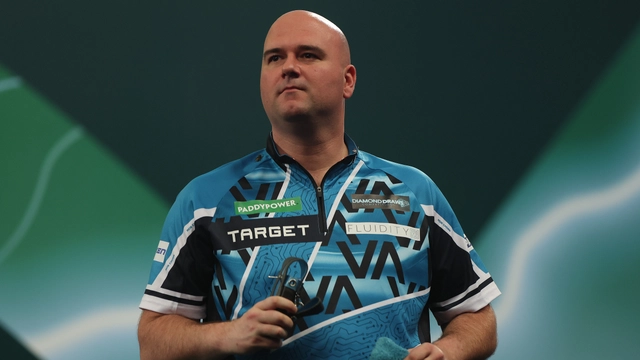
Rob Cross Withdraws From Dutch Darts Championship as Luke Littler Follows Through on His Threat
The Dutch Darts Championship has suffered another significant setback just as the tournament is about to get underway, with former world champion Rob Cross withdrawing at the last minute and Luke Littler remaining absent after following through on his threat to boycott events in the Netherlands.
For darts fans, it is a frustrating combination. Cross had already travelled to Maastricht before deciding to return home for personal reasons, while Littler’s absence raises a much bigger question about the relationship between the sport’s biggest stars and the crowds paying to watch them. Two different situations, but both have changed the story surrounding this weekend’s tournament.
The biggest talking point is that neither decision should be confused with the other. Cross has not publicly linked his withdrawal to crowd behaviour, and the reason he gave was personal. Littler, meanwhile, has been much more direct about why he no longer wants to compete in certain events in the Netherlands.
Rob Cross Makes Late Decision to Withdraw
Cross announced his withdrawal on Thursday night after arriving in Maastricht for the final European Tour event of the 2026 season.
The 2018 PDC World Darts Championship winner explained his decision in a message on Instagram, writing: “I had just arrived in Maastricht. But unfortunately I’ve had to pull out of the tournament and return back home due to personal reasons. Apologies to the PDC Europe and all the fans.”
The 35-word message made the situation clear, but it offered no further explanation about the circumstances behind his decision. There is no reason to speculate about his private situation when he has chosen not to disclose more.
For the organisers, however, the timing is undeniably awkward. Cross was expected to enter the competition in the second round on Saturday, facing either Ricardo Pietreczko or Dutch qualifier Heine Uuldriks.
Instead, Northern Irish veteran Brendan Dolan has been named as his replacement and will take Cross’s place in the draw. It gives Dolan an opportunity to compete in one of the season’s final major European Tour events, although the late change also alters the competitive picture for the players involved.
Cross is no ordinary name on the circuit. The former world number two has enjoyed considerable success throughout his career, including winning the world title in 2018 and lifting the European Championship trophy twice.
His absence is therefore a loss for the field, particularly with the tournament representing the final opportunity for players to make their mark on the 2026 European Tour calendar.
Luke Littler Follows Through on His Threat
While Cross’s withdrawal came as a surprise, Littler’s absence from the Dutch Darts Championship is part of a much bigger story that has been developing for weeks.
The world number one had already made his feelings clear after receiving a hostile reception during the World Series of Darts Finals in Amsterdam. Littler faced boos and whistles during matches against Dutch player Danny Noppert and England’s Nathan Aspinall.
Following that experience, the teenager warned that he would reconsider travelling to the Netherlands for future European Tour events if the treatment continued.
“If the Dutch stay like this, then I’m not going to do any Euro Tours over there,” Littler said in September.
He also explained his frustration, saying: “There’s just no point in me travelling, wasting my time whilst I’m getting booed. I just want to play my darts, obviously sign autographs and stuff. Because the past two nights I’ve done nothing. I’ve just walked off stage, not thanked anyone.”
Those comments were more than an emotional reaction to a difficult weekend. Littler has now missed the Dutch Darts Championship in Maastricht, having also withdrawn from two Players Championship events in Den Bosch scheduled for September.
For a player who has become one of the biggest attractions in professional darts, that is a significant development.
Littler’s appeal extends well beyond the traditional darts audience. His performances have brought fresh attention to the sport, and his matches attract enormous interest because fans want to see whether anyone can stop him.
That is precisely why his absence matters. Tournament organisers lose the opportunity to feature one of the sport’s biggest stars, while supporters miss the chance to watch a player who has repeatedly delivered memorable performances on the biggest stages.
Is Littler Right to Stand His Ground?
This is where the debate becomes interesting, because there are legitimate arguments on both sides.
From Littler’s perspective, professional darts is his job. He travels to tournaments to compete, entertain supporters and try to win titles. Persistent booing can make that environment unpleasant, particularly when it becomes a distraction during matches.
Nobody should expect a professional player to pretend that hostile treatment does not bother them. The atmosphere is part of darts, but there is a difference between passionate support for a home favourite and behaviour that appears designed to disrupt an opponent.
At the same time, some supporters will argue that booing has always been part of darts culture. Players such as Michael van Gerwen and Gerwyn Price have also experienced difficult crowds, and handling pressure is part of competing at the highest level.
That argument deserves consideration, but it should not become an excuse for every form of crowd behaviour.
There is also a question about whether Littler’s decision will change anything. If his absence encourages organisers to take crowd conduct more seriously, it could have a positive effect. However, if supporters view the boycott as an overreaction, the divide between the player and sections of the Dutch audience could become even wider.
The important thing is that Littler has made his position clear through his actions, not just his words.
Whether fans agree with him or not, he has shown that he is prepared to miss tournaments rather than continue travelling into an atmosphere he finds unacceptable.
Brendan Dolan Gets an Unexpected Opportunity
With Cross returning home, Brendan Dolan has been handed a late opportunity to compete in Maastricht.
The Northern Irishman will enter directly into the second round, where Cross had been scheduled to play the winner of the first-round match between Ricardo Pietreczko and Heine Uuldriks.
That is a valuable opportunity for Dolan, who is making only his third European Tour appearance of 2026, according to DartsNews.
Late replacements rarely have the luxury of a straightforward build-up. Players must adjust quickly to the draw, prepare for an opponent whose identity may not be confirmed until the opening round is completed, and make the most of the opportunity presented to them.
Dolan will know that the draw has opened a door, but taking advantage of it is another challenge entirely.
He has considerable experience on the professional circuit, including reaching the final of the 2013 Dutch Darts Masters. That background could prove useful in a tournament where several established names will be looking to finish the European Tour season strongly.
For Dolan, the immediate priority will be to settle into the competition and see how far he can progress.
Cross Will Hope to Return for the European Championship
Although Cross will not feature in Maastricht, the latest reports indicate that he is expected to return for the European Championship in Dortmund next week.
That would be welcome news for supporters of the former world champion, who remains a proven performer on the big stage.
Cross won the PDC World Darts Championship in 2018 and has captured the European Championship title twice. Those achievements underline why his withdrawal is notable, even if the reason behind it remains private.
The key detail is that Cross has cited personal reasons and has not publicly offered further information. His decision should therefore be treated separately from the debate surrounding Littler and crowd behaviour.
There is no confirmed connection between the two situations.
If Cross returns as expected in Dortmund, attention will quickly shift back to his performance and whether he can build on his recent form. For now, however, the priority is allowing him the space to deal with whatever has prompted his withdrawal.
Dutch Darts Championship Faces a Different Challenge
The tournament runs from October 16 to 18 at Maastricht’s MECC and is the final event on the 2026 European Tour calendar.
Defending champion Jonny Clayton will be among the players looking to finish the campaign with another title, while home favourite Michael van Gerwen will also be a major attraction.
The absence of Littler, Cross and other withdrawn players changes the complexion of the competition. Luke Humphries and Joe Cullen had also withdrawn before the draw, with Mike De Decker and Daryl Gurney taking their places.
These changes create opportunities for other competitors, but they also leave the event without several recognisable names who would ordinarily attract significant attention.
For the players who remain, that could mean a clearer path towards the later stages. Yet a tournament without some of its biggest stars can still produce compelling darts, particularly when experienced contenders and emerging challengers sense an opportunity.
Ultimately, the action on the oche will determine who lifts the trophy.
What Happens Next?
Rob Cross’s late withdrawal and Luke Littler’s continued absence have given the Dutch Darts Championship an unexpected storyline before the competition has even begun.
Cross’s situation is a personal matter, with Brendan Dolan stepping in to replace him. Littler’s decision, meanwhile, has reignited an important debate about crowd behaviour and the responsibilities of fans at professional sporting events.
Both stories will be worth following beyond this weekend, especially if Cross returns in Dortmund and Littler maintains his stance on competing in the Netherlands.
The biggest question is whether the situation surrounding Littler will lead to meaningful changes in how hostile crowd behaviour is handled, or whether the disagreement will continue into future tournaments.
What do you think? Is Luke Littler right to stand his ground and avoid tournaments where he feels disrespected, or should professional players accept booing as part of darts culture? Share your opinion.