
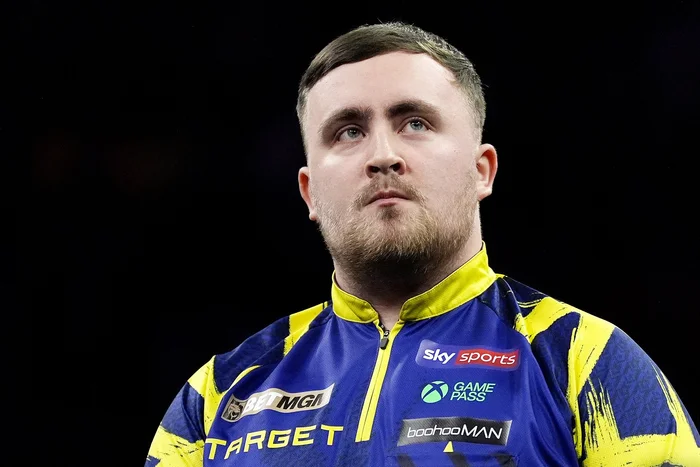
The electric rise of Luke Littler has been one of the defining stories in modern darts, but with fame has come an increasingly complicated relationship with the crowd. That tension was on full display once again during the Premier League Darts night in Aberdeen, where the teenage sensation was met with loud and sustained boos as he made his walk-on to the stage.
As the lights dimmed and the music began, the atmosphere inside the arena initially carried the usual sense of anticipation. But as soon as Littler emerged, the mood shifted dramatically. A chorus of jeers rippled through the crowd, growing louder with each step he took toward the oche. It was not a brief or scattered reaction either. The boos were prolonged, echoing across the venue and momentarily overpowering the music that accompanied his entrance.
For a player still in his teenage years, such a hostile reception could easily become overwhelming. Yet Littler has shown throughout this Premier League campaign that he is far from a typical young competitor. Instead of shrinking under the pressure, he has developed a remarkable ability to absorb the noise and remain locked in on his performance. The Aberdeen crowd may have made their feelings clear, but Littler’s body language suggested he was neither surprised nor particularly rattled.
This was not an isolated incident. In fact, it has become something of a recurring theme throughout the season. From England to mainland Europe, Littler has frequently walked into arenas where sections of the crowd have chosen to greet him with boos rather than cheers. What might have started as a one-off reaction has now evolved into a pattern, making his matches some of the most emotionally charged moments on the Premier League calendar.
There are several factors that appear to have contributed to this shift in crowd sentiment. Earlier in the season, Littler found himself at the centre of a heated on-stage exchange with Dutch player Gian van Veen. The incident, which saw tensions rise during a fiercely contested match, sparked widespread discussion among fans and pundits. Some felt Littler’s reaction crossed a line, while others defended him as a passionate young player caught up in the moment. Regardless of where opinions fell, it marked a turning point in how certain crowds responded to him.
Football rivalries have also played their part. Littler’s well-known support for Manchester United has not gone unnoticed, particularly in cities where loyalties run strongly in the opposite direction. In places like Liverpool, that allegiance has added an extra edge to the atmosphere, with fans using it as another reason to direct their frustration toward him. While this element may seem trivial compared to on-stage controversies, it has nonetheless contributed to the overall narrative surrounding his appearances.
Despite the negativity, there is a growing belief within the sport that Littler has actually benefited from the hostile environments. Rather than allowing the boos to undermine him, he has often used them as fuel, channeling the energy into his performances. Time and again, he has responded with clinical scoring, sharp finishing, and a level of composure that belies his age. In several instances, he has gone on to win matches—and even entire nights—after being heavily booed during his introduction.
Those close to the sport have noted this resilience. Senior figures within professional darts have pointed out that Littler appears to thrive on the intensity, suggesting that the adversity has accelerated his mental development. At the same time, there is an acknowledgment that constantly playing in such environments could eventually take its toll, especially over a long and demanding season. Managing that balance will be an important part of his continued growth.
Back in Aberdeen, the situation felt like a continuation of everything that has come before. The boos were loud, the tension was palpable, and the spotlight was firmly fixed on Littler. Yet as the match got underway, the focus shifted—as it so often does—to his ability on the board. Once the darts began to fly, the noise from the crowd became just another layer of the spectacle rather than its defining feature.
Observers have been divided in their interpretation of the crowd’s behavior. Some argue that it is simply part of the theatre of darts, a sport where audience interaction plays a significant role in shaping the atmosphere. From this perspective, boos are no different from cheers—they are expressions of passion that contribute to the drama of the occasion. Others, however, believe that the level of hostility directed at a young player is excessive and risks crossing into unsportsmanlike territory.
Players themselves often take a more pragmatic view. Many have experienced both sides of crowd reactions over the course of their careers and understand that such responses can be unpredictable. In that sense, Littler’s situation is not entirely unique, even if the scale of attention surrounding him amplifies every moment.
What cannot be denied is that Littler has quickly become one of the central figures in the sport. His rapid ascent, combined with his undeniable talent, has made him a focal point for fans, media, and fellow players alike. With that prominence comes scrutiny, and with scrutiny often comes criticism.
The Aberdeen reception served as yet another reminder of the pressures that accompany life at the top level. For Littler, each walk-on now carries an element of uncertainty—not in terms of his performance, but in how he will be received. It is a dynamic that adds intrigue to every appearance, turning even the moments before a match begins into part of the overall drama.
And yet, if his performances so far are anything to go by, Littler is more than capable of handling it. The boos may continue, and the reasons behind them may evolve, but they have not derailed his progress. If anything, they have become part of the story that surrounds him—a story of a young player navigating the highs and lows of sudden stardom.
As the Premier League season moves forward, all eyes will remain on Littler. Not just to see how he performs, but to see how he continues to respond to the unique challenges that come with being one of the most talked-about figures in darts. In Aberdeen, the crowd made their voices heard. But once again, Littler showed that his focus remains firmly on the board, where the only response that truly matters is delivered through his darts.
Leave a Reply