
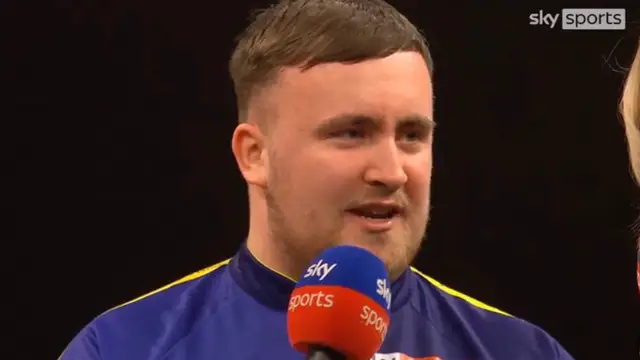
The electric atmosphere inside Glasgow’s OVO Hydro Arena was supposed to mark one of the Premier League Darts season’s biggest nights — a high-octane final between two of the sport’s brightest stars. Instead, what unfolded was a gripping 6-5 thriller between teenage sensation **Luke Littler** and arch-rival **Luke Humphries** that was marred by persistent crowd disruption. Sections of the audience repeatedly whistled and jeered in attempts to unsettle the players at the oche, turning what should have been a celebratory showcase of elite darts into a chaotic and frustrating spectacle. Some observers later branded it among the worst crowds in the tournament’s recent history, sparking widespread criticism across the darts community.
Littler, the 19-year-old world champion affectionately known as “The Nuke,” has grown accustomed to intense receptions during his meteoric rise. He has faced hostile treatment in venues like Leeds, Liverpool, and even Brighton, where incidents have ranged from booing tied to his Manchester United fandom to more extreme disruptions, such as a pint being thrown at Nathan Aspinall during a walk-on. Earlier in the season, Littler had even floated the idea of skipping certain German events due to similar negativity from crowds. Yet nothing quite prepared the sport for the sustained interference that overshadowed this particular Premier League night in Scotland.
The match itself was a classic. Humphries, the reigning world champion and a formidable Premier League title holder, pushed Littler to the brink in a nail-biting decider. Both players traded blows with trademark precision and power, producing moments of breathtaking scoring and dramatic finishes. But the on-stage drama was repeatedly interrupted by whistling that visibly rattled the competitors. Missed checkouts and momentary lapses in composure became more frequent, particularly when one player stepped up to throw. The constant background noise chipped away at the focus required for professional darts at the highest level, where even the slightest distraction can prove costly.
The disruption reached its peak in the latter stages when veteran match referee Kirk Bevins took the unusual step of addressing the crowd directly over the microphone. In a stern, clear voice, he declared, “Stop whistling, thank you.” The intervention was intended to restore order, but according to Littler, it had the opposite effect. Speaking candidly after the match, the young champion explained the sequence of events: “There was a few in particular that were doing it when Luke [Humphries] was throwing. Kirk told them to be quiet and it got even worse, and then I missed doubles and Luke breaks at 5-4. I’m just like, ‘Kirk, you’ve made it worse for me there, I’m 5-4 down.’ But I broke back and held my throw very strongly again.”
Littler acknowledged that officials eventually have to step in when behaviour crosses the line, but he felt the timing and outcome of Bevins’ plea only heightened the tension for him. “If it’s the same outcome as what it was when Kirk said it, then obviously just leave it,” he reflected. “They’ve got to step in at some point and say something. But yeah, that was pretty bad, but I got the win.” His ability to regroup, break back immediately, and then hold throw with authority in the decisive moments showcased remarkable mental resilience for someone still in his teens.
Commentators and pundits watching from the booth echoed the frustration felt by many in the darts world. Legendary voice Wayne Mardle openly questioned why persistent disruptors were not removed from the arena, while Sky Sports reporter Abigail Davies argued that the fans “actively contributed” to both players falling short of their absolute best by creating an environment of unnecessary interference. The whistling wasn’t confined to the final; it had already affected earlier matches that night, including Gerwyn Price’s encounter, adding to a growing sense that crowd behaviour was spiralling out of control.
This wasn’t an isolated incident for the PDC. Similar problems had plagued previous nights in the Premier League, with whistling and jeering reported in Glasgow and other stops. The infamous Brighton pint-throwing episode remained fresh in fans’ memories, described by Littler himself as “crazy.” Such episodes risk damaging the sport’s reputation at a time when darts is enjoying unprecedented global popularity, packed arenas, and lucrative broadcasting deals. The passion of darts crowds has always been part of the entertainment — the chants, the colourful outfits, the wall of noise — but when that energy turns into deliberate attempts to disrupt throws, it crosses into unsportsmanlike territory that undermines the players’ efforts.
In response to the mounting criticism and Littler’s public comments, the PDC issued a firm statement condemning the behaviour. They reiterated that whistling or booing while players are at the oche is unacceptable, emphasising that every competitor steps on stage intending to deliver top-level performances and entertainment for everyone watching, whether in the venue or at home. The organisation reminded spectators that inappropriate conduct violates the terms and conditions of entry and can result in immediate removal from the arena. They also pledged closer collaboration with venues to enforce these rules more proactively, sending a clear message that such antics would not be tolerated moving forward.
Despite the tumultuous backdrop, Littler’s victory highlighted his growing maturity and mental toughness. Coming from behind after the referee’s intervention backfired, he showed the composure of a seasoned champion rather than a teenager still finding his feet at the elite level. His post-match reflections revealed a player who understands the need for balance: crowds bring energy and atmosphere, but they must channel that passion in ways that enhance rather than undermine the competition.
As the Premier League Darts campaign rolls on through various UK and European cities, the onus now falls on multiple parties. Players must continue developing strategies to block out distractions, much as Littler did by refocusing and delivering when it mattered most. Organisers and officials need to refine their approach to crowd management, potentially through clearer pre-event messaging, better stewarding, or even technological aids to identify persistent offenders. And fans themselves carry a responsibility to celebrate the skill on show without resorting to tactics that spoil the spectacle for everyone.
Darts has thrived because of its unique blend of sporting excellence and raucous entertainment. The sport’s rapid growth has brought bigger crowds, louder atmospheres, and new demographics, but it has also introduced challenges around behaviour that must be addressed to protect the integrity of the game. Littler’s experience in Glasgow serves as a timely reminder: when the whistles drown out the darts, the real losers are the players, the true supporters, and the sport itself.
In the end, Littler walked away with the win and valuable Premier League points, but the night left a sour taste. Moving forward, the hope is that future nights will be defined by breathtaking 180s, dramatic checkouts, and unified crowd energy — not by interventions that only make matters worse. The Premier League remains one of darts’ flagship competitions, and preserving its reputation as a stage for sporting drama, rather than crowd chaos, will be crucial for its continued success. Littler and his fellow professionals deserve arenas that amplify their talent, not distract from it.
Leave a Reply